In this blog, we explore the science of encouragement and what we have learned about the power of encouragement. If you haven’t yet had a chance to read how Rohkaisijat got started, you can read about it here.
Why can a single message change the direction of a person’s life? We started looking into this so that we could better understand what mechanisms lie behind impact.
Human behavior and how it changes has been studied for well over a hundred years, but only in recent decades have we learned how enormous the effects of even small things can be. This became truly clear to me when I became acquainted with Gregory M. Walton’s intervention studies at Stanford University. They provided a theoretical explanation for the impact of video messages. Walton works with Carol Dweck, who rose to prominence through her growth mindset research, and who has said of him: "Walton is the leading expert in the field of wise interventions and one of the greatest psychologists of our time."
Walton’s research focuses on how small interventions (or, in professional jargon, “interventions”) can positively influence people’s lives. He calls approaches that strengthen people’s psychological resources, such as self-confidence or a sense of belonging, “wise interventions.” Wise interventions are not “nudges” (that is, "pushes" that change the environment so that people behave differently), but an approach that takes into account the interaction between the situation and the person. In wise interventions, people are given mental tools that enable the best possible way for the individual to act. Their goal is to create lasting well-being in people’s lives.
The opposite of these wise interventions are psychologically harmful interventions, where those same qualities are weakened.1 Side note: it feels like there are a lot of these harmful interventions in the world today, and life definitely does not improve because of them.
Intervention research has been carried out for decades, and among the studies were incredibly interesting examples of how things that seemed insignificant could have huge ripple effects.2 The mechanism of impact is ultimately simple.
Critical questions
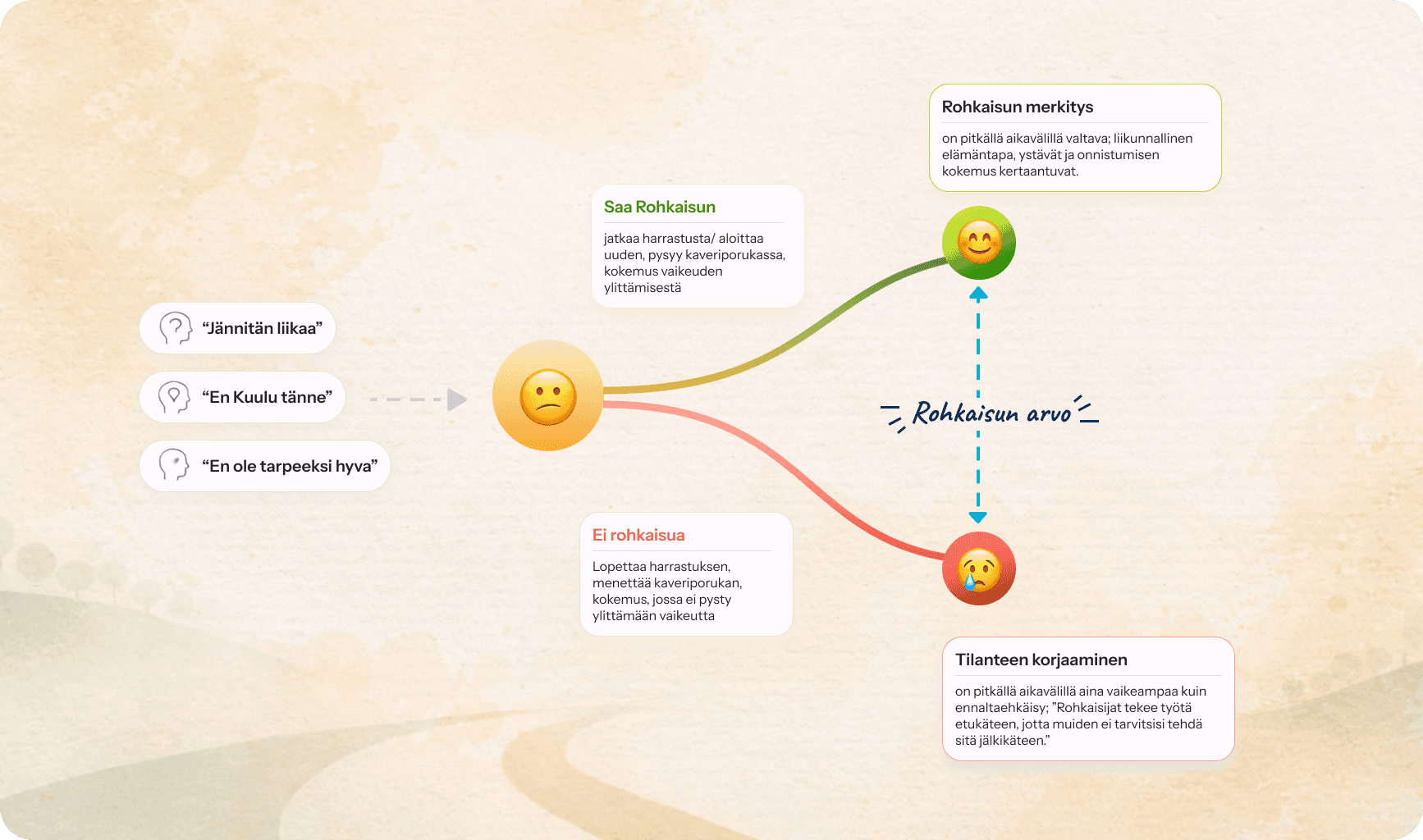
Everyone has been in a situation where they catch themselves thinking, Do I belong here? Am I good enough? Or how do others see me? These questions often arise during various transitions or other life changes, such as when considering starting a new hobby. Walton describes these questions with the phrase “core question.” The answer to such a core question determines the path a person chooses.
These questions usually relate to one of three themes:
1. identity: how you see yourself and how you assume others see you. Am I bad or a failure?
2. belonging: do you feel that you belong in the environments that matter to you, where you want to be part of things and spend your time. Can I belong here?
3. capability: do you feel that you are good enough to achieve a goal that matters to you. Can I succeed at this?
Let’s go through the theory using a practical example. Starting a new sport can be an exciting situation for many people. The excitement can be reduced by starting the sport at the same time as others. But if you are “already ten years old” and notice that most others started their activities at age six, this situation can understandably raise the question, “Am I already too old to start — can I belong here?”
When that question arises, the child begins to observe their surroundings and gather information in order to get an answer to this important question. They have mentally arrived at a fork in the road, and how they answer it determines how they act. The choice can affect the rest of their life. How does the answer take shape?
In this situation, the child looks for examples and seeks support for their decision. If they do not have examples of how a “ten-year-old old-timer” like them can succeed in the sport, it is likely that they will conclude “there is no point even trying, I am too old, nobody else has started and succeeded at my age.” Having a parent share their own experience is not necessarily any help unless the parent is a former top basketball player (the parent’s example may simply prove that you can start later in life and still be truly average).
Making meaning from observations is automatic, and the more vulnerable the child is, the more likely they are to see threats and not even dare to try. As children and young people, we are always more vulnerable because we do not yet have the perspective that comes with experience. In this way, fear of failure and a lack of positive examples can prevent trying.
Through such interpretations, a negative spiral can easily emerge, where the meaning given to a situation “solidifies” into an interpretation (eng. “calcification”) that guides behavior. Walton calls this calcified negative interpretation a “downward spiral,” in which a person sees the reality around them through threats, making success even more difficult.
Over time, interpretation becomes a subjective reality through which the child lives their life and makes choices. Conclusions drawn through this limited interpretation create a narrower picture of reality and of one’s own possibilities. Once interpretation becomes subjective reality, it can be difficult to change later.
How can a downward spiral be prevented?
This is where wise interventions come in. The encouragement video that launched the movement addressed a situation where a child who was nervous about games vomited before matches. Because I was someone with firsthand experience, it was easier for the child to accept thoughts from me than from their parents. In reality, the parents had said roughly all the same things, but as an outside authority my words carried a very different weight.3
When the child understood that the way they felt nervous was by no means unusual or wrong, and heard that even top players get nervous, they received a more constructive answer to the question, “Is there something wrong with me?” Based on that answer, they were able to build a better way of seeing their situation.
In this blog, we explore the science of encouragement and what we have learned about the power of encouragement. If you haven’t yet had a chance to read how Rohkaisijat got started, you can read about it here.
Why can a single message change the direction of a person’s life? We started looking into this so that we could better understand what mechanisms lie behind impact.
Human behavior and how it changes has been studied for well over a hundred years, but only in recent decades have we learned how enormous the effects of even small things can be. This became truly clear to me when I became acquainted with Gregory M. Walton’s intervention studies at Stanford University. They provided a theoretical explanation for the impact of video messages. Walton works with Carol Dweck, who rose to prominence through her growth mindset research, and who has said of him: "Walton is the leading expert in the field of wise interventions and one of the greatest psychologists of our time."
Walton’s research focuses on how small interventions (or, in professional jargon, “interventions”) can positively influence people’s lives. He calls approaches that strengthen people’s psychological resources, such as self-confidence or a sense of belonging, “wise interventions.” Wise interventions are not “nudges” (that is, "pushes" that change the environment so that people behave differently), but an approach that takes into account the interaction between the situation and the person. In wise interventions, people are given mental tools that enable the best possible way for the individual to act. Their goal is to create lasting well-being in people’s lives.
The opposite of these wise interventions are psychologically harmful interventions, where those same qualities are weakened.1 Side note: it feels like there are a lot of these harmful interventions in the world today, and life definitely does not improve because of them.
Intervention research has been carried out for decades, and among the studies were incredibly interesting examples of how things that seemed insignificant could have huge ripple effects.2 The mechanism of impact is ultimately simple.
Critical questions
Everyone has been in a situation where they catch themselves thinking, Do I belong here? Am I good enough? Or how do others see me? These questions often arise during various transitions or other life changes, such as when considering starting a new hobby. Walton describes these questions with the phrase “core question.” The answer to such a core question determines the path a person chooses.
These questions usually relate to one of three themes:
1. identity: how you see yourself and how you assume others see you. Am I bad or a failure?
2. belonging: do you feel that you belong in the environments that matter to you, where you want to be part of things and spend your time. Can I belong here?
3. capability: do you feel that you are good enough to achieve a goal that matters to you. Can I succeed at this?
Let’s go through the theory using a practical example. Starting a new sport can be an exciting situation for many people. The excitement can be reduced by starting the sport at the same time as others. But if you are “already ten years old” and notice that most others started their activities at age six, this situation can understandably raise the question, “Am I already too old to start — can I belong here?”
When that question arises, the child begins to observe their surroundings and gather information in order to get an answer to this important question. They have mentally arrived at a fork in the road, and how they answer it determines how they act. The choice can affect the rest of their life. How does the answer take shape?
In this situation, the child looks for examples and seeks support for their decision. If they do not have examples of how a “ten-year-old old-timer” like them can succeed in the sport, it is likely that they will conclude “there is no point even trying, I am too old, nobody else has started and succeeded at my age.” Having a parent share their own experience is not necessarily any help unless the parent is a former top basketball player (the parent’s example may simply prove that you can start later in life and still be truly average).
Making meaning from observations is automatic, and the more vulnerable the child is, the more likely they are to see threats and not even dare to try. As children and young people, we are always more vulnerable because we do not yet have the perspective that comes with experience. In this way, fear of failure and a lack of positive examples can prevent trying.
Through such interpretations, a negative spiral can easily emerge, where the meaning given to a situation “solidifies” into an interpretation (eng. “calcification”) that guides behavior. Walton calls this calcified negative interpretation a “downward spiral,” in which a person sees the reality around them through threats, making success even more difficult.
Over time, interpretation becomes a subjective reality through which the child lives their life and makes choices. Conclusions drawn through this limited interpretation create a narrower picture of reality and of one’s own possibilities. Once interpretation becomes subjective reality, it can be difficult to change later.
How can a downward spiral be prevented?
This is where wise interventions come in. The encouragement video that launched the movement addressed a situation where a child who was nervous about games vomited before matches. Because I was someone with firsthand experience, it was easier for the child to accept thoughts from me than from their parents. In reality, the parents had said roughly all the same things, but as an outside authority my words carried a very different weight.3
When the child understood that the way they felt nervous was by no means unusual or wrong, and heard that even top players get nervous, they received a more constructive answer to the question, “Is there something wrong with me?” Based on that answer, they were able to build a better way of seeing their situation.
The true power of encouragement lies in the fact that both rigid positive and negative interpretations can have effects far into the future. In Walton's research, it has been found that a single small intervention can affect, years later, the likelihood of graduating from university, employment, salary level, and health.
The key to your lock lies in someone else's words
We all have mental locks; patterns of thought that bind us and limit our thinking. Locks limit our opportunities to act in the world. The people closest to us play an important role in opening the locks of the mind. They help when a child is afraid of the dark, tell them there is no monster under the bed, and listen to the child's worries.
At first, the locks are small and fragile. But gradually the locks strengthen if they are not opened. For many locks, the words that unlock them are close at hand. But what do we do when we encounter a lock whose opening keys are not available among those close to us? Sooner or later, a situation comes up where the words of a parent or coach are not enough to open the lock.
Then encouraging words from someone outside can be the solution.
What if we could help people find the keys to those locks for which unlocking words cannot be found nearby? What if we could get answers to such core questions that, when answered, would open the door to a better future for an ever-growing number of people?
This is what Rohkaisijat is about. The science of encouragement helps us better understand how we can use our own words to help those who need support – with the right words, at just the right moment.
Juho R/ Nenonen
Help us build a movement of encouragement in Finland and subscribe to our newsletter. You'll receive practical guidance on how encouragement can transform both your own life and the lives of others for the better! You can subscribe through this link
Sources and references
1 Social media seems to be an inexhaustible source of psychologically harmful interventions that consistently spread bad feelings across the world. For more on the topic, see Jonathan Haidt's book The Anxious Generation and the blog https://www.afterbabel.com/
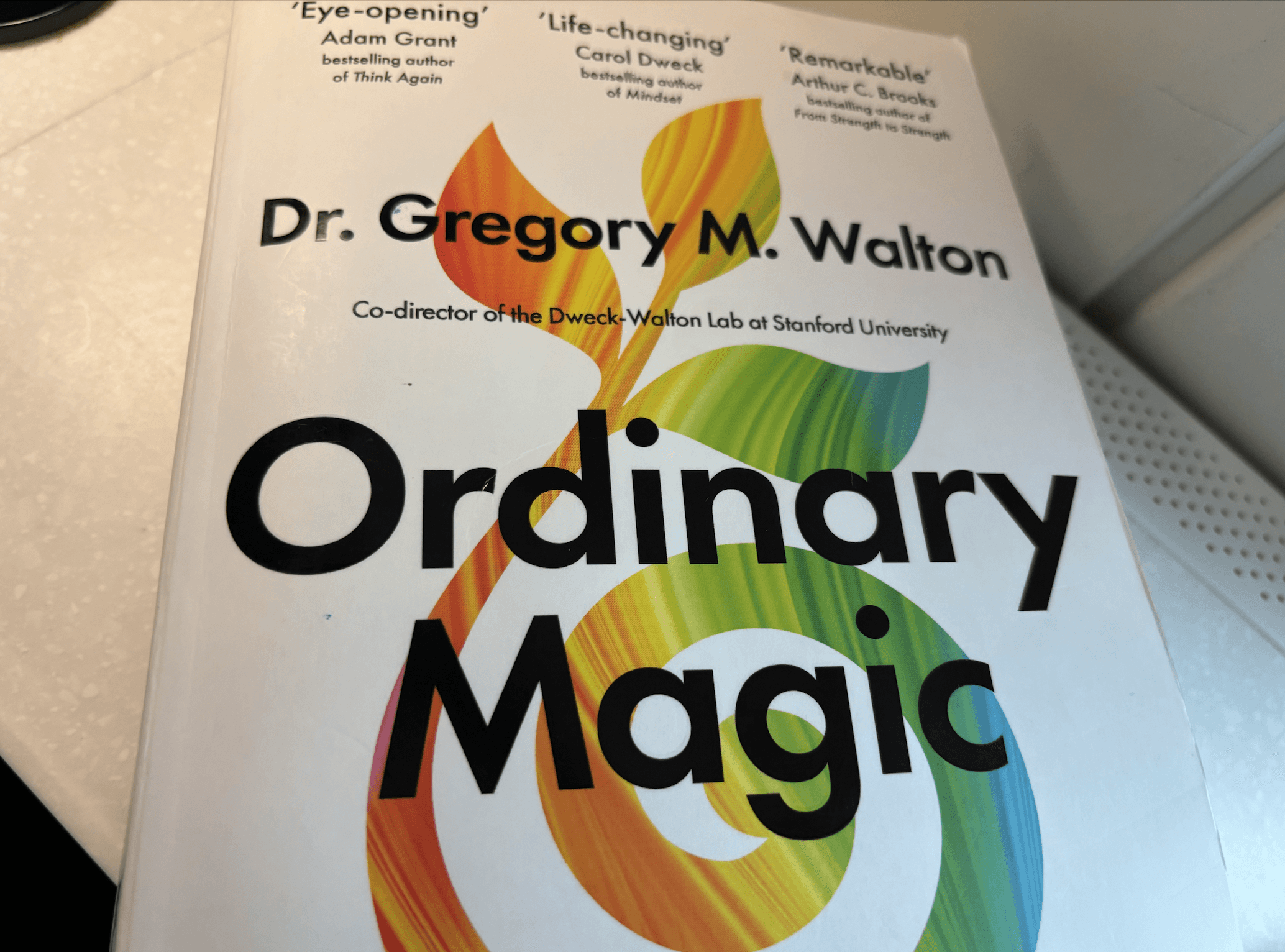
2 Greg Walton's book Ordinary Magic – the science of how we can achieve big changes with small acts is full of incredibly good research on how a small intervention can create huge effects. The book title refers to how this feels almost like magic, which it isn't.
3 Viivi Naapi, a consulting psychologist for the Rohkaisijat movement and a specialist psychologist for children and young people, described in an interview how there are so many different emotional dynamics involved in the relationship between children and parents that in some situations it can be easier for children to accept advice from outsiders than from their parents – I've encountered this many times with my own son...